Counseling for the Cancer Continuum
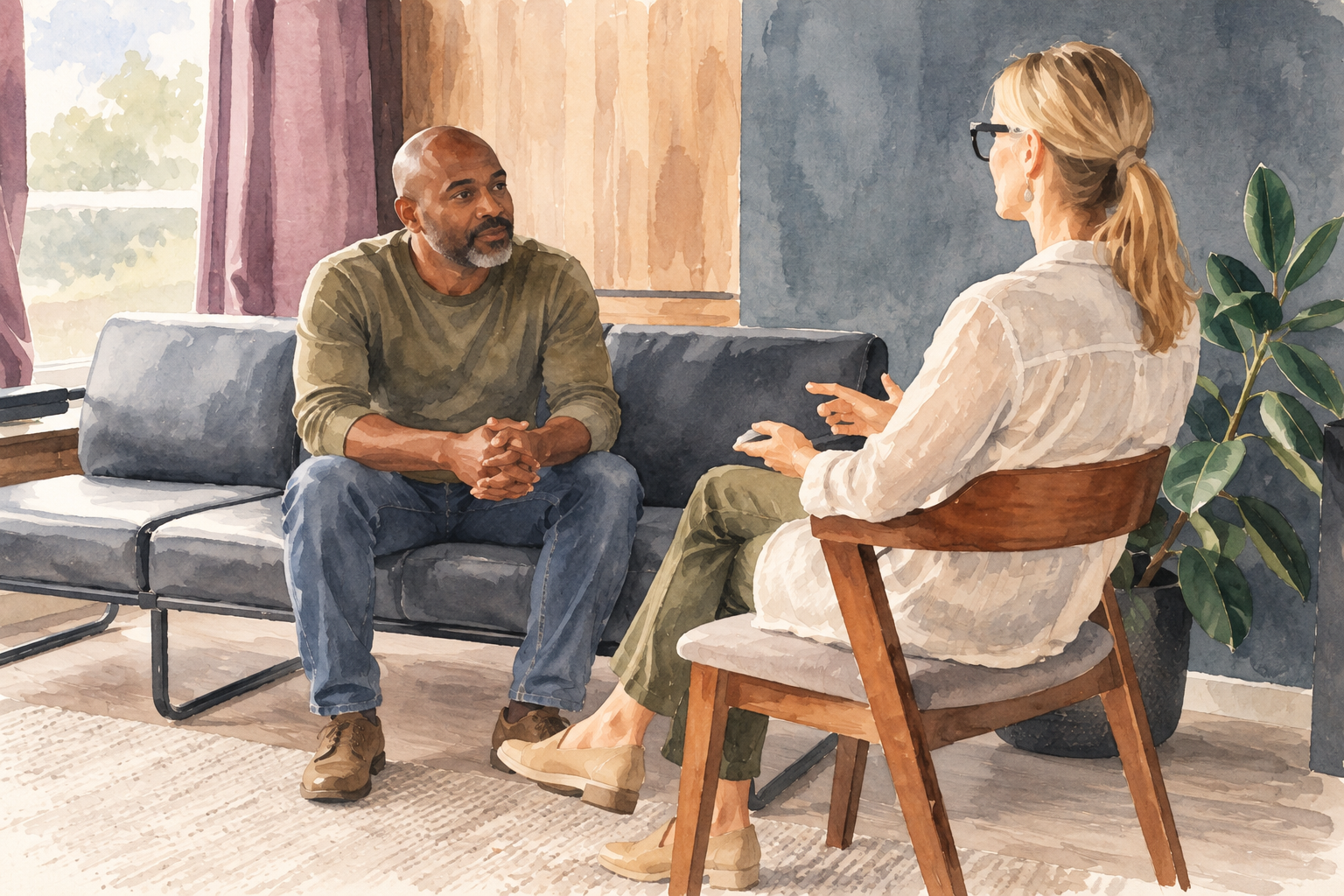
Cancer continues to change your life long after the diagnosis and the treatments.

*NOTE: Individual counseling is provided through Counseling & Care Planning, where I practice under clinical supervision. The consultation button above will take you to the Contact Us page on the Counseling & Care Planning website. Fill in the form to request a free 15-minute consultation.
Whether you are living with cancer, completing treatment, in remission, under surveillance, or adjusting to life on maintenance therapy, the emotional impacts of cancer don't follow the same timeline as your medical care.
Counseling offers a place to process what happened, make sense of what has changed, and find your way into the life you have today.
“Nobody told me about this part.”
Question: Why – when your body is stronger than ever – do you now feel like things are falling apart?
Answer: Because physical recovery and emotional recovery don’t happen on the same timeline.
Making sense of your new life is the second half of rehabilitating from a life-changing medical experience
After medical “stability,” you finally have energy to process what happened.
Treatments may have ended. But the experience hasn't.
Fear & uncertainty
A scan, appointment, ache, or unexplained symptom can suddenly bring cancer back into the foreground.
Roles & relationships
Other people may expect you to perform at your previous level. Or they may be ready to move on before you are. Or want you to feel grateful when your experience is much more complicated.
Body image
Your body may feel unfamiliar, unreliable, altered, scarred, vulnerable – or simply different from the one you knew before.
Mortality
Cancer can make impermanence and death difficult to put out of your awareness, even when you're doing well.
What does “after” mean?
“After” doesn't mean cured, cancer-free, or finished with medical care.
You may be in remission, living with metastatic disease, receiving maintenance treatment, under surveillance, or continuing to manage lasting effects of treatment.
What matters is that there is enough physical stability and psychological space to begin looking beyond the immediate demands of survival to ask: How has this experience changed me, and how do I want to live now?
Identity
You may wonder whether you're still a “patient,” whether “survivor” fits, or who you are outside of treatment.
Grief
Even with a good prognosis, there are losses: health, fertility, ability, work, relationships, independence, confidence, innocence, plans, or a former sense of safety.
Relief, anxiety, gratitude, anger, jealousy, joy, and grief can coexist.
Honoring the complexity is part of the process.
How counseling can help
Cancer Counseling gives you space to:
Process what happened rather than simply push past it.
Live with uncertainty without allowing it to occupy all of your attention.
Grieve losses that others may not recognize.
Develop a more compassionate relationship with a changed or vulnerable body.
Explore changes in identity, relationships, priorities and meaning.
Decide what you want your life to be organized around now.
Emotional recovery
Cancer treatments focus on healing the body.
Cancer counseling focuses on restoring a sense of wholeness.
Doctors helped repair your body. Counseling can help repair the emotional, relational, and existential side effects of your diagnosis.
Part of this work includes finding peace in uncertainty.
Part of it includes reevaluating or restoring relationships.
Part of it includes grieving the life you expected while discovering what still gives your life meaning today.
What to expect
Your sessions are a space where you can be honest and authentic.
You don't have to be positive. You don’t need to have the right words. You don't need to protect me from your emotions.
Some visits are filled with conversation, others with silence.
Sometimes we laugh, sometimes we cry.
Sometimes we simply make space for what has been too heavy to carry alone.
Together we'll move at your pace, exploring what matters most to you and discovering ways to live with greater clarity, courage, and compassion. No matter the road ahead.
My Approach:

Reconnect
Mindfulness-Based Therapy
Learning to meet difficult experiences with greater awareness, compassion, and steadiness.
Noticing: What do I really feel? What happens if I attend to it rather than push it away?

Integrate
Narrative Therapy
Helping to reclaim authorship of your story so illness becomes part of your life, instead of the whole story.
Questioning: How does this experience fit into the entirety of my life’s struggles and strengths?

Choose
Values-Centered Therapy (ACT)
Exploring what continues to give your life purpose, connection, and direction, especially in the midst of uncertainty.
Deciding: What matters most now? How do I let these principles guide my life? What values will I model for others and be remembered for?

Notice
Somatic Therapy
Listening to how stress, grief, fear, and hope live within your body, and gently creating space for comfort again.
Exploring: How can I develop a new relationship with the body I have now?
Why Work With a Cancer-Focused Counselor?

Cierra McNamara, MSW, LSW, IPCC
Member of Colorado Cancer Coalition (CCC), Association of Oncology Social Workers (AOSW), International Psycho-Oncology Society (IPOS)
A cancer diagnosis brings challenges that extend far beyond medical treatment.
My work is informed by more than two decades alongside people living with cancer – as an oncology massage therapist, mindfulness instructor, death doula, grief educator, and palliative care social worker.
This experience helps me understand not only the emotional impact of cancer, but also the realities of treatment, the language of healthcare, and the ways illness can reshape identity, relationships, and everyday life.
Together, we create a space where your whole Self – not just your medical history – is welcomed with curiosity and compassion.
Is this the right time for counseling?
My work is particularly suited to people who have enough stability and capacity to reflect on their experience, not just manage the next immediate crisis.
You don't need to have everything figured out. You don't need to be finished with medical care. And you don't need to know exactly what you want from counseling.
You simply want enough distance from your health emergency to be able to explore:
What has happened? What has changed? What am I carrying? What matters now?
Cancer changed your life. You have time to decide what comes next.
If you're wondering whether counseling might be helpful, a consultation is the best place to start. We can talk briefly about what you're experiencing, what you're looking for, and whether working together feels like a good fit.

*NOTE: Individual counseling is provided through Counseling & Care Planning, where I practice under clinical supervision. The consultation button above will take you to the Contact Us page on the Counseling & Care Planning website. Fill in the form to request a free 15-minute consultation.
Groups for Cancer Care

Cancer Conversations
Talking with family, with doctors, even with a therapist, isn’t always enough.
The weight you carry due to changes in your body, roles, self-identity, finances, and life options can be lightened by speaking to and learning from others who understand you.
Monthly Groups
3-week Programs
Special Discussions

You may also be looking for: