
Hello, I’m Cierra.
I work with people whose lives have been changed by serious illness, medical crisis, caregiving, and loss.
Much of my work happens after an immediate health emergency has passed, when there is finally enough room to ask questions that may have been impossible to consider while simply getting through it:
What happened to me?
What has changed?
What am I carrying?
How do I want to live now?
I believe these questions deserve our time, curiosity, and compassionate attention. Because only when we pause to feel what is most painful in our lives, can we honor the depth of that experience and know the extent of our strength.
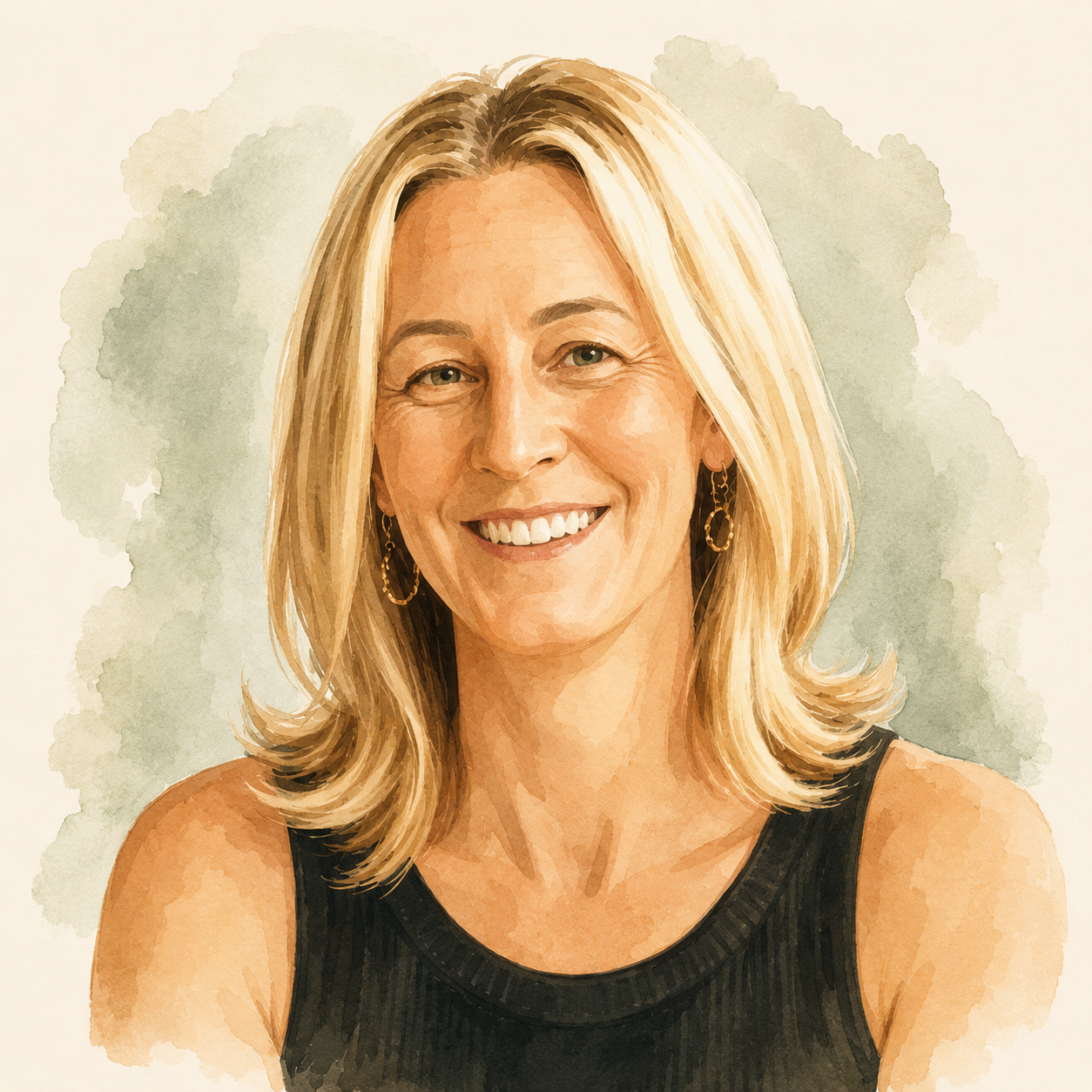
Why this work matters to me
Many people assume working with illness, grief, and loss is difficult and depressing. That’s never been true for me. Just the opposite. I’ve learned that working with people through their darkest days has a way of illuminating what’s most important in life: connection and compassion.
Throughout my life I’ve been drawn to contemplative practices, interested in answers to age-old questions: Why are we here? What really matters? How do we minimize suffering?
In a fast-paced world focused on things that are superficial and temporary, I find synergy among people wrestling with broken bodies, unexpected losses, and unbearable responsibilities.
Life-examination that happens in the face of pain and helplessness is life-changing.
For me, this is the real definition of healing.
When I’m with people who are buried in questions but still courageously look for answers, I am inspired. I feel connected. I feel a reassurance that coming closer to suffering is the best way to defang it.
My aim is to provide space and support for you during your journey, giving you permission to explore the depths of your sorrow and the edges of your fear. Eventually helping you uncover a calmness in the center of the storm.
Mindfulness and palliative care changed the way I understand suffering
For decades I’ve been interested in life and death, meaning and mysteries.
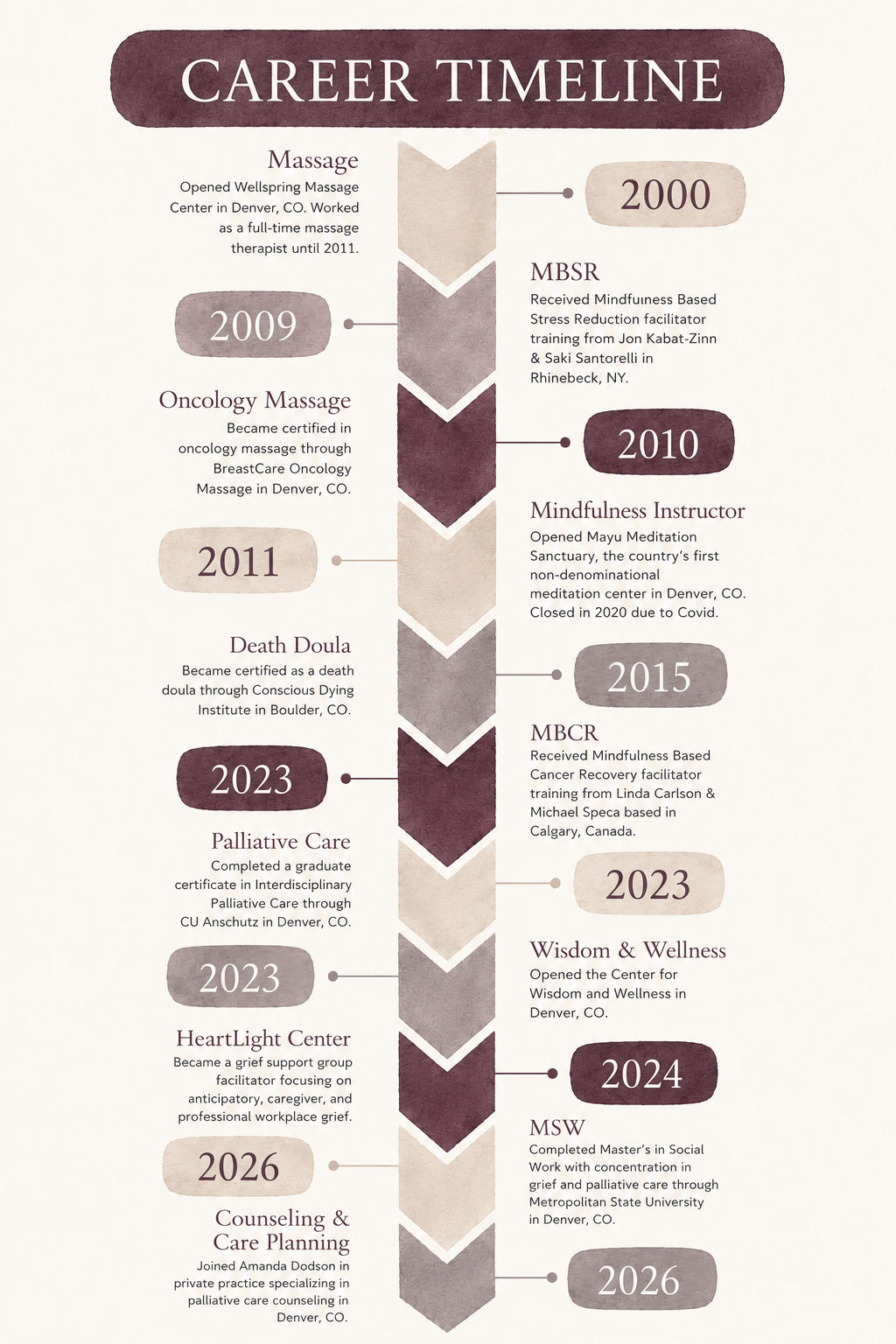
I watched the documentary Silverlake Life mesmerized by the tragedy and tenderness of witnessing a loved one’s impending death. I poured through mind-body medicine books by Deepak Chopra, Carolyn Myss, and Christiane Northrup. I found solace in Buddhist and secular meditation teachers: Thich Nhat Hanh, Jack Kornfield, Pema Chodron, Joseph Goldstein. Finding the work of Mindfulness-Based Stress Reduction (MBSR) founder Jon Kabat-Zinn was a turning point, and studying with him in New York was the privilege of a lifetime.
Although my own perspective has been influenced by Vipassana/Insight meditation, counseling with me does not require meditation or any particular spiritual or religious belief.
Mindfulness teaches me how to recognize suffering.
Palliative care lets me to attend to it.
For me, mindfulness isn't primarily about relaxation or making difficult thoughts and feelings disappear. It is about learning to pay attention to our experience without immediately needing to escape it, judge it, or change it.
This becomes particularly meaningful when life presents realities that cannot simply be undone. A diagnosis happened. A body changed. Someone died. A relationship is different. Mortality became real. The future became less certain.
Counseling can create enough space to notice what is here, understand our reactions to it, and become more intentional about how we want to respond.
I don’t believe the goal is to get back to normal.
After a life-changing experience, returning to exactly who we were before may not be possible—or even the most useful goal.
I think instead about integration.
How can this experience become part of your life without becoming the entirety of your life?
How can you develop a relationship with a body that may be different from the one you had before?
How can grief and gratitude, fear and hope, loss and possibility coexist?
And given what you now know about yourself, your life and its uncertainty: What matters to you now?
What you can expect from me
I am comfortable with conversations that don't have easy answers.
You don't have to make your experience sound better, or worse, than it is. You can be grateful to be alive and furious about what happened. You can love someone who is ill and resent what their illness has required of you. You can hope for the future and be frightened of it.
I won't require you to find a silver lining, reach acceptance on someone else's timeline, or turn suffering into a lesson.
My role is to bring curiosity, steadiness and compassion to the conversation; help you notice patterns and possibilities you may not see on your own; and create space for you to decide what meaning, priorities and choices are genuinely yours.
My work extends beyond the counseling room
I also believe communities need places where difficult parts of being human can be talked about openly.
My work includes grief education and support through HeartLight Center, Death Cafés and death education workshops at Park Hill Library, and various community conversations, and educational programs exploring serious illness, caregiving, grief, mortality and what it means to live well when life changes.
These aren't separate interests to me. They are different expressions of the same belief: we benefit when difficult experiences are given language, attention and room for honest conversation.
When I’m not working
You can find me paddle boarding with my husband, watching Italian TV shows, and cheering for my favorite triathlon athletes.